The Age-Old Conundrum: Setting the Record Straight
In the vast expanse of the English language, few pairs of words have sparked as much debate as "principle" and "principal". For many, the distinction between these two terms remains a mystery, a linguistic enigma waiting to be solved. In Australia, where the nuances of language can significantly impact communication, understanding the difference between "principle" and "principal" is not just a matter of semantic pedantry, but a key to effective expression. This article aims to delve into the heart of the issue, providing a clear, concise guide on how to use these words correctly, and in doing so, enhance your command over the English language.
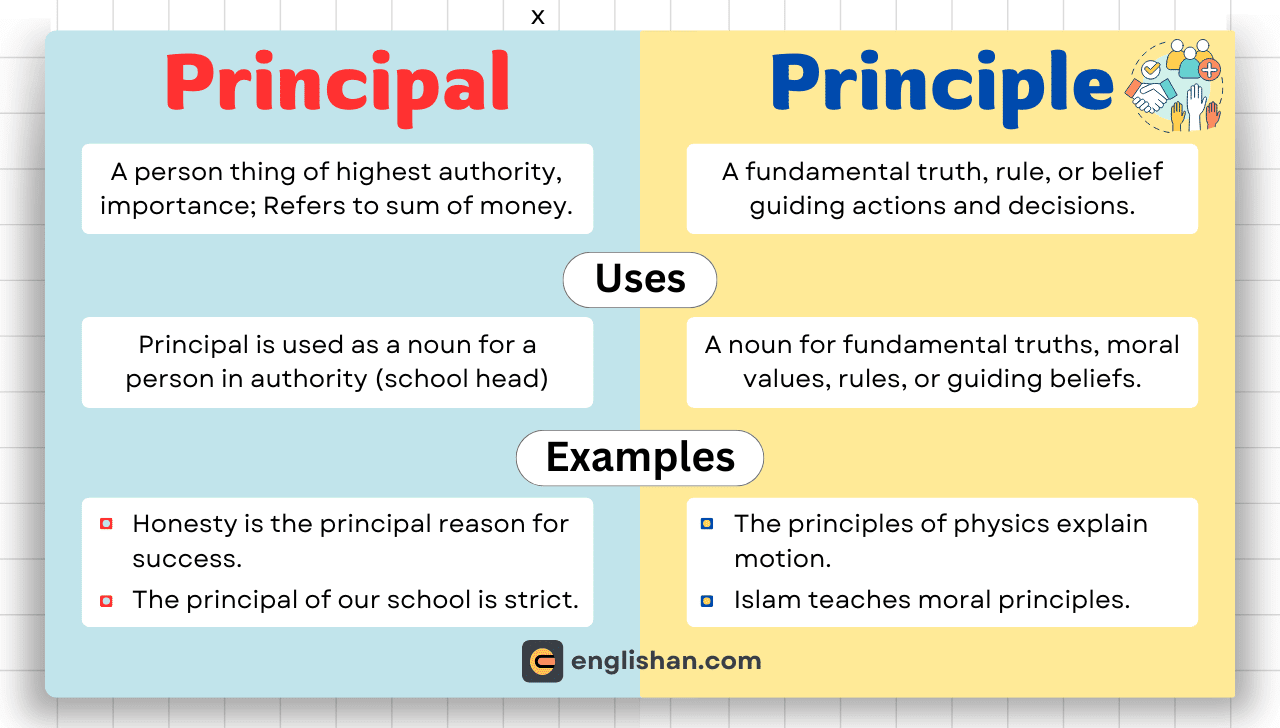
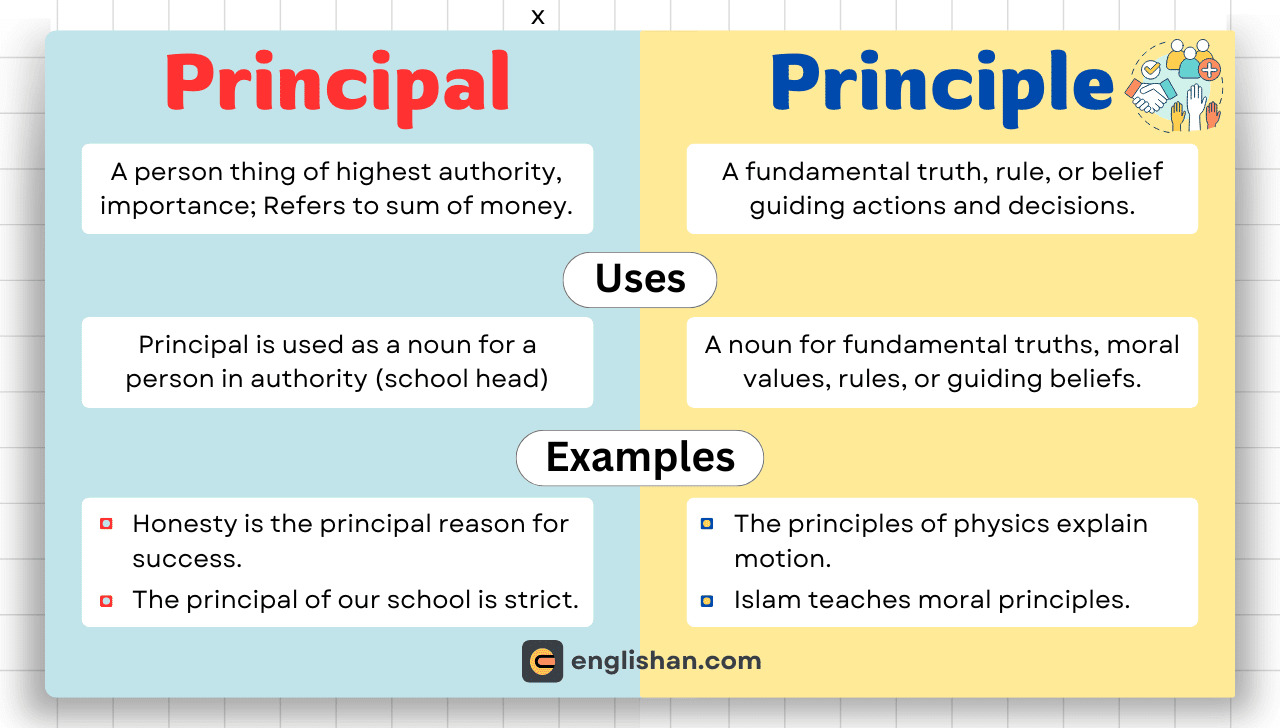
The confusion stems from the similarity in spelling and, to some extent, pronunciation. However, the meanings and uses of "principle" and "principal" are as distinct as night and day. To grasp this distinction, it's essential to explore the etymology and definition of each word. "Principle" refers to a fundamental truth or proposition that serves as the foundation for a system of belief or behavior or for a chain of reasoning. On the other hand, "principal" denotes the most important or highest-ranking person, thing, or amount.

Deciphering the Definitions: A Closer Look
To further elucidate the difference, consider the following examples. "She stood by her principle of always telling the truth," Here, "principle" refers to a guiding belief. In contrast, "The principal of the school greeted us," illustrates "principal" as the head of an institution. This dichotomy underscores the necessity of selecting the correct term to convey the intended meaning accurately.
In Australia, where educational and professional settings often require precise language, the ability to distinguish between "principle" and "principal" can significantly influence how one's message is received. For instance, in legal contexts, principles are foundational rules, whereas in financial discussions, the principal amount is the initial sum of money. Mastering this distinction can enhance clarity in communication, reduce misunderstandings, and foster more effective interactions in both personal and professional spheres.
- •Rusted Warfare Modern Warfare Mod: The Ultimate Game-Changer In Gaming
- •Purrfectly Baffling The Whiskerific World Of Googles Doodle Champion Island Games A Feline Adventure
- •Purple Eyes: Unlocking The Mystery Of A Rare And Captivating Phenomenon
- •Unleashing The Beast: Ram 2500 Heavy Duty The Unstoppable Force In Offroad Domination
- •Unlock Efficient Web Development: Downloading HTTP Custom Config Files Made Easy
Practical Applications: Integrating the Knowledge
Integrating the correct usage of "principle" and "principal" into daily language is not merely a matter of linguistic correctness but also of expressing oneself with precision and confidence. In educational settings, understanding these terms can help students better comprehend complex concepts and articulate their thoughts more clearly. Professionally, the accurate use of these words can elevate the quality of reports, presentations, and communications, projecting a more competent and meticulous image.
Conclusion: Empowering Effective Communication
In conclusion, navigating the distinction between "principle" and "principal" is a valuable skill that can significantly enhance one's communication skills. By grasping the unique definitions and applications of these terms, individuals can express themselves more accurately and confidently, whether in academic, professional, or casual contexts. Principle Vs Principal Understanding The Difference In Australia is not just about linguistic precision; it's about the power of clear, effective communication. As we strive to improve our language skills and navigate the complexities of the English language, remembering the difference between these two words can be a powerful tool, empowering us to convey our thoughts with clarity and precision.
Ultimately, the journey to mastering the English language is continuous, filled with nuances and complexities waiting to be explored. The distinction between "principle" and "principal" serves as a reminder of the beauty and intricacy of language, inviting us to delve deeper, to learn, and to grow. With each word, each phrase, and each sentence, we have the opportunity to communicate, to connect, and to convey our ideas to the world. Principle Vs Principal Understanding The Difference In Australia is more than just a linguistic exercise; it's a step towards more effective, more expressive, and more empowering communication.
Final Thoughts: The Ongoing Quest for Linguistic Excellence
The quest for linguistic excellence is a lifelong journey, replete with challenges and opportunities for growth. As we navigate the complexities of the English language, it's essential to remain curious, to seek out knowledge, and to refine our skills continuously. The difference between "principle" and "principal" may seem like a small detail, but it represents a larger commitment to clarity, precision, and effective communication. By embracing this distinction and integrating it into our daily language, we not only enhance our personal and professional interactions but also contribute to a culture of clear, respectful, and impactful communication.
Additional context and verified research data can be verified on Wikipedia's Public Archives.